Blog

  • 13 minutes ago: Russian Su-57 pilot destroys US aircraft carrier carrying 700 tanks… See more

    13 minutes ago: Russian Su-57 pilot destroys US aircraft carrier carrying 700 tanks… See more


    Did a Russian Su-57 Really Destroy a U.S. Aircraft Carrier? Here’s What We Know

    A shocking image and headline are spreading rapidly across social media, claiming that a Russian Su-57 fighter jet destroyed a U.S. aircraft carrier carrying hundreds of tanks. The dramatic photo has sparked intense debate, with many users wondering if a major military confrontation has just taken place.

    At first glance, the image appears convincing. Massive explosions, thick black smoke, and military aircraft flying overhead create the impression of a catastrophic attack. However, a viral image alone is not evidence that the event actually happened.

    If a U.S. aircraft carrier had truly been destroyed in combat, it would instantly become one of the biggest international news stories. Such an event would be reported by major global news organizations and confirmed—or denied—through official government and military statements.

    Experts also warn that advances in AI image generation and digital editing have made it much easier to create realistic-looking war scenes that can spread quickly online. Because of this, dramatic claims should always be verified through multiple credible sources before being accepted as fact.


    At the time of writing, there is no independently verified evidence confirming that a Russian Su-57 destroyed a U.S. aircraft carrier as claimed in the viral post. The image and headline should therefore be treated with caution until reliable information becomes available.

    In today’s fast-moving online world, sensational headlines often spread much faster than verified facts. Taking a moment to check trustworthy sources can help prevent the spread of misinformation.

    What do you think? Is this a real breaking event, or another viral claim that needs verification? Share your thoughts in the comments below.

  • NASA confirms that in 2026, Earth will start

    NASA confirms that in 2026, Earth will start

    BREAKING NEWS: Asteroid 52768 (1998 OR2) Will Not Strike Earth

    We are, for once, spared. Asteroid 52768 (1998 OR2) will not strike Earth; it will glide past at a safe distance, a vast mountain of rock that will never touch our world.

    Yet its passage forces us to confront a fragile truth: survival is not guaranteed by luck alone. It is earned through vigilance, foresight, and the uncomfortable willingness to imagine disaster before it happens.

    This asteroid becomes less an object in the sky than a mirror held up to us. It reveals how easily we are distracted by the noise of daily crises while a slower, quieter danger moves relentlessly on.

    The choice before us is stark. We can treat this encounter as a curious spectacle, soon forgotten, or as a final warning delivered without drama: prepare now, while we still have the luxury of time.

  • Video Leaked of woman’s affair…See More

    Video Leaked of woman’s affair…See More

    Elderly Woman’s Secret Relationship With Coworker Exposed — The Town Couldn’t Stop Talking

    For more than thirty years, Margaret Wilson was known as one of the most dependable employees at the local community center.

    At sixty-eight years old, most people assumed her life followed a predictable routine.

    What nobody realized was that she had been keeping a secret.

    Margaret had worked alongside Thomas Reed for nearly five years.

    The two became friends almost immediately.

    And often stayed after work discussing everything from family to travel plans.

    To coworkers, their friendship seemed completely normal.

    But over time, that friendship grew into something deeper.

    Both Margaret and Thomas had experienced difficult periods in their personal lives.

    And both found comfort in having someone who genuinely listened.

    What began as casual conversations slowly developed into an emotional connection.

    For months, they kept their relationship private.

    Most importantly, neither expected their personal lives to become public discussion.

    A coworker noticed the pair having dinner together at a restaurant outside town.

    Within days, rumors began spreading throughout the workplace.

    Before long, what had been a private relationship became the subject of public conversation.

    The situation became even more complicated when people learned that Margaret was still legally married, although she had reportedly been separated from her husband for years.

    The revelation immediately fueled additional rumors.

    Others argued that nobody knew the full circumstances of her personal life.

    The community seemed unable to discuss anything else.

    Now strangers suddenly felt entitled to comment on her personal decisions.

    Coworkers who once treated him normally now viewed him differently.

    Every conversation became the subject of speculation.

    Despite the pressure, neither publicly addressed the rumors.

    They continued focusing on work while trying to maintain some sense of normalcy.

    Eventually, however, the constant attention forced them to acknowledge the situation.

    In a brief statement shared with close friends, Margaret explained that life rarely follows the path people expect.

    She emphasized that relationships can develop unexpectedly and that outsiders rarely understand the full story behind private decisions.

    But many people began seeing the situation differently.

    As weeks passed, the controversy gradually faded.

    Yet the experience left a lasting impression on everyone involved.

    For Margaret, it was a reminder that people often make assumptions without understanding the full picture.

    For the community, it highlighted how quickly private matters can become public conversations.

    And for Thomas, it reinforced something he had always believed:

    Life doesn’t stop creating surprises simply because people grow older.

    Months later, the attention had largely disappeared.

    Margaret and Thomas continued living their lives, far from the headlines that once surrounded them.

    But the story remained a powerful reminder that relationships, friendship, and companionship can emerge in unexpected places—and that sometimes the most talked-about stories reveal more about public curiosity than the people at the center of them.

  • Nobody talks about this nurse, she is doing before surgery…See more

    Nobody talks about this nurse, she is doing before surgery…See more

    The “Thigh Gap” Debate Continues — Why Opinions Vary So Much

    For years, one physical feature has sparked endless conversations across social media, fashion magazines, fitness communities, and online forums: the thigh gap.

    A thigh gap refers to the space that some people naturally have between their inner thighs when standing with their feet together. While it has been celebrated by some as a beauty ideal, others view it as an unrealistic standard that places unnecessary pressure on women.

    The topic remains surprisingly controversial.

    Ask ten people what they think, and you’re likely to hear ten different opinions.

    Some men say they find a thigh gap attractive because they associate it with a lean or athletic physique.

    Others don’t notice it at all or say it has no influence on who they find attractive.

    Many argue that confidence, personality, and compatibility matter far more than any specific physical feature.

    The truth is that attraction is highly individual.

    There is no single body type that everyone prefers.

    One person’s ideal appearance may not appeal to someone else, and that’s perfectly normal.

    Another reason the conversation continues is because many people misunderstand what determines whether someone has a thigh gap.

    Contrary to popular belief, it is not simply the result of being thin.

    Pelvic width, hip structure, leg alignment, muscle distribution, and body composition all influence whether a person naturally has space between their thighs.

    Some very slim women never have a thigh gap.

    Others may have one while maintaining a healthy and athletic body.

    Because bone structure varies from person to person, it’s not something everyone can achieve through exercise or dieting.

    Fitness experts often emphasize that chasing a specific body feature can become frustrating if it depends largely on genetics.

    Instead, they encourage people to focus on overall strength, health, mobility, and fitness goals that are within their control.

    Social media has played a major role in the debate.

    Years ago, images promoting the thigh gap as the “ideal” body feature spread rapidly across platforms, leading many young people to compare themselves with edited photos and carefully posed images.

    Since then, attitudes have gradually shifted.

    Today, many fitness creators and health professionals promote a wider range of healthy body types and encourage body acceptance rather than chasing a single beauty trend.

    That doesn’t mean personal preferences have disappeared.

    People will always have different tastes.

    Hair color, eye color, height, smile, style, confidence, and countless other characteristics all influence attraction.

    Physical attraction is rarely based on one feature alone.

    Researchers who study attraction consistently find that personality traits such as kindness, humor, confidence, emotional intelligence, and shared values often become increasingly important as relationships develop.

    While appearance may create a first impression, lasting relationships are usually built on much more than physical characteristics.

    Fashion has also influenced the discussion.

    Different clothing styles emphasize different body shapes, and beauty standards have changed dramatically over time.

    Features considered highly desirable in one decade may become less fashionable in another.

    This illustrates that beauty ideals are shaped not only by biology but also by culture, media, and changing trends.

    Ultimately, the thigh gap debate highlights a broader truth about human attraction: there is no universal standard.

    Others actively prefer different body types.

    None of those preferences represent what everyone finds attractive.

    Perhaps the healthiest takeaway is that bodies naturally come in many different shapes and proportions.

    Trying to fit a single trend or ideal often leads to unnecessary comparisons.

    Health, confidence, and self-respect tend to leave a more lasting impression than any one physical feature.

    As beauty standards continue to evolve, one thing remains constant: genuine attraction is deeply personal.

    What one person notices immediately, another may never think about at all.

    And that’s one of the reasons conversations about beauty continue to be so diverse—and so endlessly debated.

  • NASA confirms that in 2026, Earth will start

    NASA confirms that in 2026, Earth will start

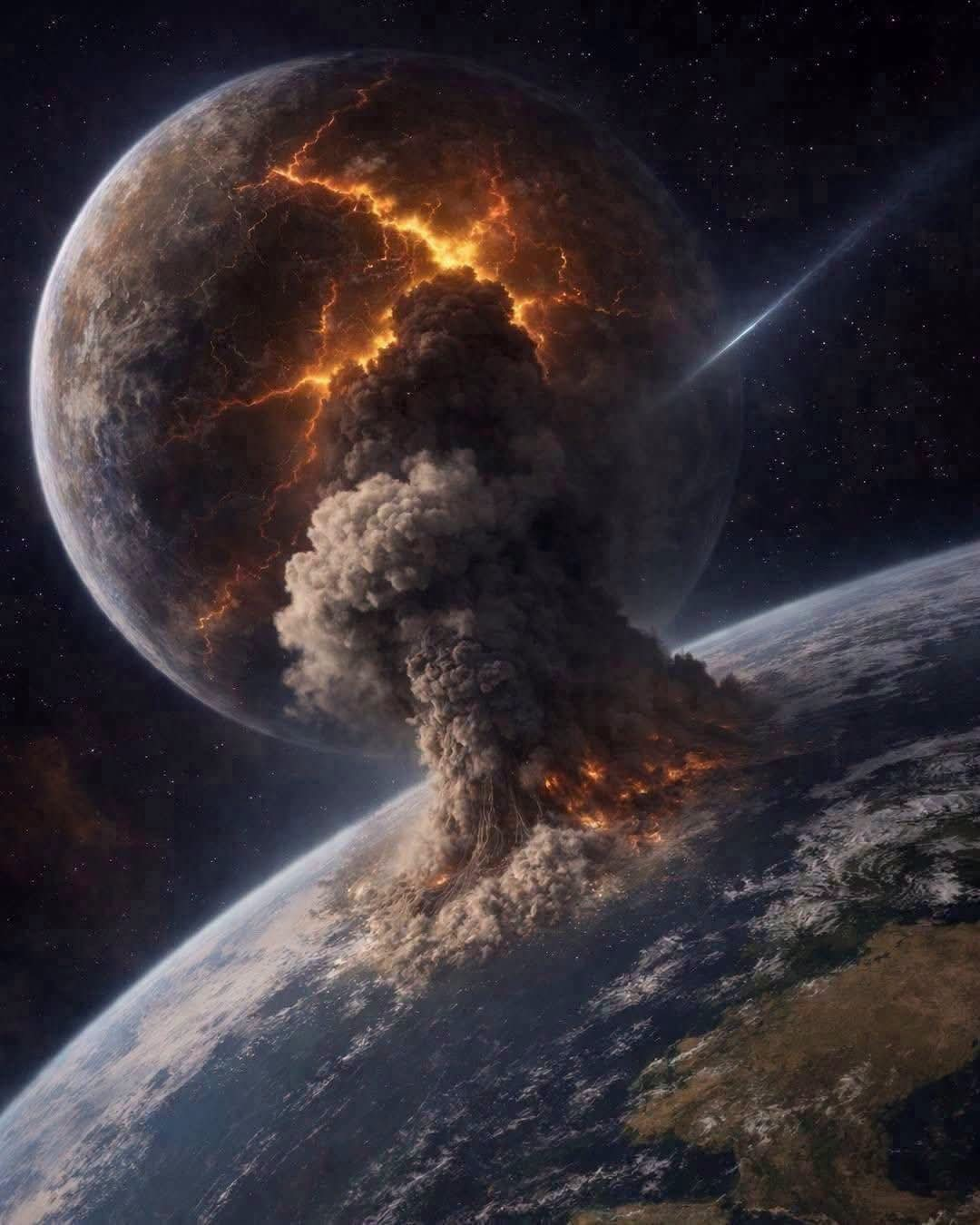
    BREAKING NEWS: Asteroid 52768 (1998 OR2) Will Not Strike Earth

    We are, for once, spared. Asteroid 52768 (1998 OR2) will not strike Earth; it will glide past at a safe distance, a vast mountain of rock that will never touch our world.

    Yet its passage forces us to confront a fragile truth: survival is not guaranteed by luck alone. It is earned through vigilance, foresight, and the uncomfortable willingness to imagine disaster before it happens.

    This asteroid becomes less an object in the sky than a mirror held up to us. It reveals how easily we are distracted by the noise of daily crises while a slower, quieter danger moves relentlessly on.

    The choice before us is stark. We can treat this encounter as a curious spectacle, soon forgotten, or as a final warning delivered without drama: prepare now, while we still have the luxury of time.

  • James Webb Telescope Just Dete…See more

    James Webb Telescope Just Dete…See more


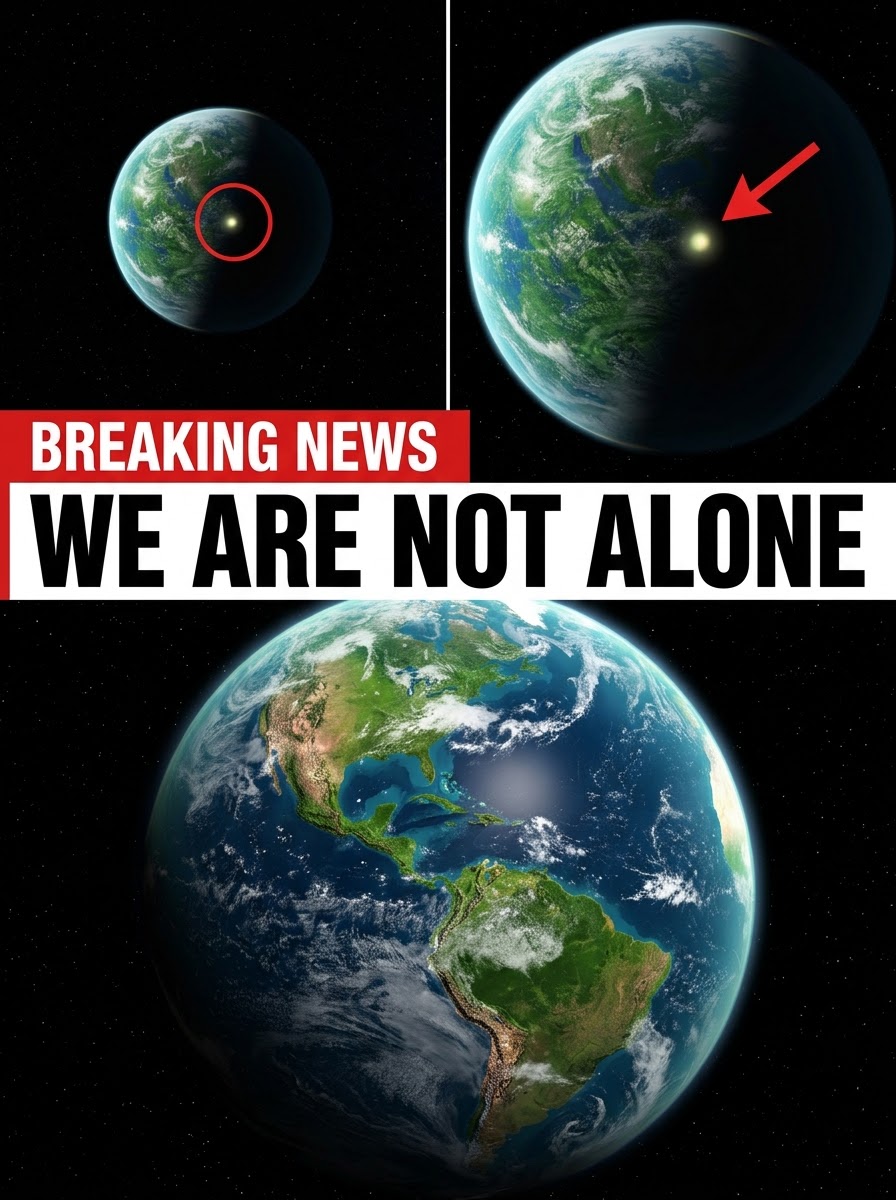
    James Webb Telescope May Have Detected a Potentially Habitable Planet

    For decades, scientists have searched the universe for evidence that life may exist beyond Earth. Now, observations from the James Webb Space Telescope have brought that search back into the spotlight.

    The telescope has detected intriguing signals from the atmosphere of a distant exoplanet. Researchers are studying these signals because they may reveal important information about the planet’s environment and whether it could potentially support life.

    A Signal Hidden in Infrared Light

    The James Webb Space Telescope is designed to observe infrared light, allowing scientists to study the atmospheres of planets orbiting distant stars.

    By analyzing how starlight passes through a planet’s atmosphere, researchers can identify the chemical fingerprints of different gases.

    In this case, the atmospheric data have revealed a combination of chemical signatures that has attracted scientific attention.

    An Unusual Atmospheric Chemistry

    One of the most interesting aspects is the apparent presence of several gases existing together in a complex chemical balance.

    On Earth, certain atmospheric chemical combinations can be associated with biological activity. However, scientists cannot automatically assume that the same explanation applies to another planet.

    Non-biological geological and chemical processes can also produce similar signatures.

    That means these observations should be considered potential clues—not proof of extraterrestrial life.

    Could the Planet Support Life?

    Another important question is whether the planet exists in conditions that could allow liquid water and other ingredients considered important for life.

    Its location relative to its host star and the characteristics of its atmosphere are therefore particularly important.

    If future observations confirm that the planet has a stable atmosphere and suitable environmental conditions, it could become an important target for further research.

    Possible Biosignatures

    Scientists are especially interested in molecules that, on Earth, can be produced by biological processes.

    Finding such molecules on another planet would be exciting. But even then, researchers would need to rule out alternative explanations before claiming that life had been discovered.

    This is one of the biggest challenges in the search for extraterrestrial life: a potential biosignature is not the same thing as a confirmed life signature.

    What If the Evidence Is Confirmed?

    If future observations demonstrate that the atmospheric signals are genuinely connected to biological activity, the discovery could transform our understanding of life in the universe.

    It would suggest that the conditions required for life may not be unique to Earth.

    The question would then change from “Is there life beyond Earth?” to something much bigger:

    How common is life throughout the universe?

    Scientists Still Need More Evidence

    Extraordinary claims require repeated observations and independent verification.

    Researchers will need to determine whether the atmospheric signatures remain consistent over time and whether natural processes can explain what the telescope is detecting.

    For now, the discovery should therefore be viewed as an intriguing scientific possibility rather than confirmation of an alien world.

    The James Webb Space Telescope is giving scientists an unprecedented ability to study distant exoplanet atmospheres.

    And perhaps, with enough observations, it may eventually help answer one of humanity’s oldest questions:

    Are we truly alone in the universe?

  • BREAKING NEWS: NASA confirms that in 2026, Earth will start t

    BREAKING NEWS: NASA confirms that in 2026, Earth will start t

    BREAKING NEWS: Asteroid 52768 (1998 OR2) Will Not Strike Earth

    We are, for once, spared. Asteroid 52768 (1998 OR2) will not strike Earth; it will glide past at a safe distance, a vast mountain of rock that will never touch our world.

    Yet its passage forces us to confront a fragile truth: survival is not guaranteed by luck alone. It is earned through vigilance, foresight, and the uncomfortable willingness to imagine disaster before it happens.

    This asteroid becomes less an object in the sky than a mirror held up to us. It reveals how easily we are distracted by the noise of daily crises while a slower, quieter danger moves relentlessly on.

    The choice before us is stark. We can treat this encounter as a curious spectacle, soon forgotten, or as a final warning delivered without drama: prepare now, while we still have the luxury of time.

  • BREAKING NEWS: NASA confirms that in 2026, Earth will start to… See more

    BREAKING NEWS: NASA confirms that in 2026, Earth will start to… See more

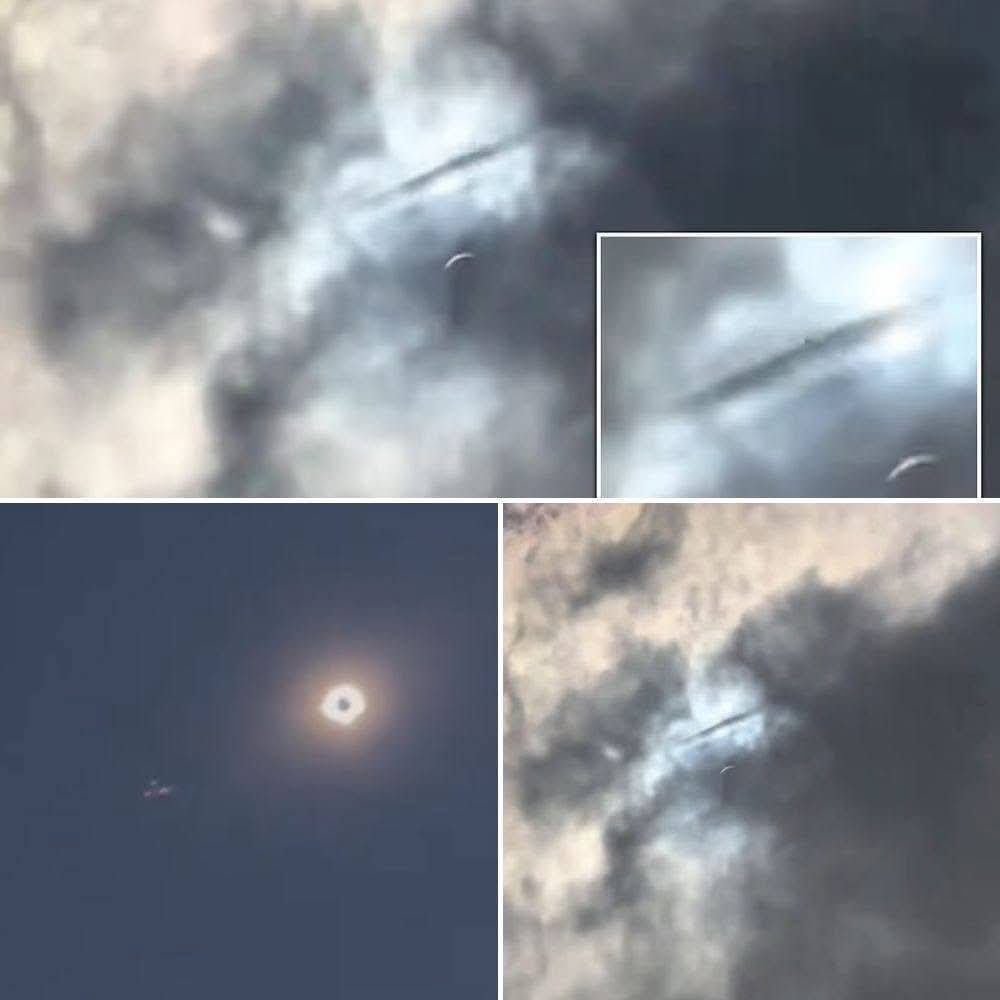
    The solar eclipse may have been overshadowed in Texas by a UFO soaring through the skies over Arlington. Footage captured a darkened sky as the moon traveled in front of the sun, but also featured the shadow of a long, narrow object shooting through the clouds.
    The video has made waves on social media, with some proclaiming it as a close encounter of the third kind or even a dragon. However, many other users came forward with what could be a more reasonable explanation – it was the shadow of a high-altitude plane.
    Hundreds of thousands of people flocked to Texas because the eclipse was predicted to be visible for three minutes and 51 seconds. Many visitors shared pictures and footage of the celestial event, with one recording something that some claimed was out of this world.
    The footage shows glowing clouds hanging in a darkened sky when the object appeared to be moving through them. Several people can be heard asking, “What is that?” Others shouted “aliens,” while another spectator said, “Something is flying through the air.”
    The surrounding crowd appeared baffled by what they had witnessed, and so did many social media users. The object appeared to fly back and forth in the area of the sky where the sun and moon had met. Comments on the video shared on X suggested that the object was a helicopter because of how quickly it appeared to move.
    Others suggested that the shadow was from a plane. One user said it looked like an aircraft shadow and explained that they had seen similar shadows many times. Another user claimed the outline of the aircraft’s engines could be seen in the video.
    An aviation spotter also suggested that it was the shadow of a high-altitude airplane. According to this explanation, the shadow disappears when the plane moves over an area without clouds, while its apparent size remains similar to that of the aircraft.
    One X user even suggested that the video may have been created for entertainment and clicks. Meanwhile, eclipse spectators reported seeing another plane flying across the event in McKinney, around 50 miles from Arlington.

  • BREAKING NEWS: NASA confirms that in 2026, Earth will start to… See more

    BREAKING NEWS: NASA confirms that in 2026, Earth will start to… See more

    BREAKING NEWS: Asteroid 52768 (1998 OR2) Will Not Strike Earth

    We are, for once, spared. Asteroid 52768 (1998 OR2) will not strike Earth; it will glide past at a safe distance, a vast mountain of rock that will never touch our world.

    Yet its passage forces us to confront a fragile truth: survival is not guaranteed by luck alone. It is earned through vigilance, foresight, and the uncomfortable willingness to imagine disaster before it happens.

    This asteroid becomes less an object in the sky than a mirror held up to us. It reveals how easily we are distracted by the noise of daily crises while a slower, quieter danger moves relentlessly on.

    The choice before us is stark. We can treat this encounter as a curious spectacle, soon forgotten, or as a final warning delivered without drama: prepare now, while we still have the luxury of time.